The Lie the Enemy Keeps Telling Me
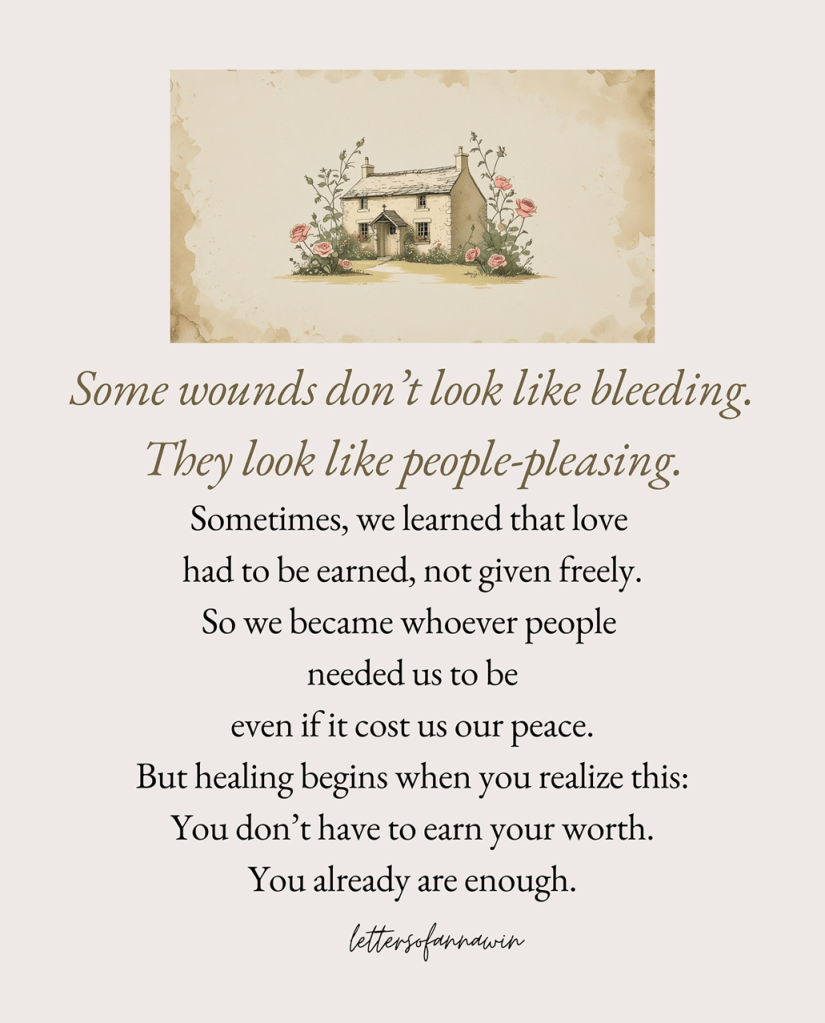
Yesterday, I was reminded afresh of something I did nearly 40 years ago that I deeply regret. And once again, I allowed the enemy to whisper lies into my mind—reminding me why I wasn’t worthy of love or attention. I’ve spent a lifetime believing that I wasn’t enough. A lifetime of trying to please people in the vain hope that they would accept me. So much of my life has been marked by feelings of condemnation, judgment, and rejection.
I could probably come up with a hundred reasons why I became this way or how it all started. But what disappoints me most is that even now, as an almost 60-year-old woman, I am still so affected by these things.
Shame’s Echo Across the Years
I’ve been the kind of person who, by the world’s standards, would be labeled an overthinker—constantly analyzing how people see me, whether they accept or reject me.
And by Christian standards, I’d be seen as someone who struggles to take every thought captive. I believe much of this stems from my formative years in a church where I heard a gospel that said: “Yes, God loves you enough to die for you—but if you sin, He will turn His face from you and punish you.”
That teaching was further solidified at home. Though I know now that my parents loved me, back then their own unhealed wounds caused them to reinforce a message of performance-based love. When I messed up, the punishment never fit the crime. Each incident left me drenched in shame, and from that place of shame, I began my relentless quest to earn love and acceptance.
Over time, shame became the lens through which I viewed myself and my world. One painful event piled upon another, building a mountain of guilt and embarrassment. And the event I mentioned earlier still haunts me—forty years later.
The Relationships That Reflected My Pain
There have been so many rejections. But perhaps they weren’t all others’ fault—I had unhealthy expectations. I was never just “me” in a friendship; I was always striving to be the perfect friend, and still, I felt like I never measured up.
Again, not their fault.
Mine.
I didn’t know how to just be.
When it came to romantic relationships, I was always drawn to the wrong kind of man. Looking back, I realize it probably had a lot to do with my own low self-esteem. I craved validation, and I believed that if a good-looking man was interested in me, it somehow proved that I was attractive—that I had value. But time and again, those relationships ended in betrayal. The truth is, I was choosing people based on how they could affirm me, not how they could love me. And maybe it’s no surprise that none of those connections were healthy. Because if I couldn’t love and accept myself—the person God created me to be—how could I ever expect someone else to?
As Far as the East is from the West
But when does the bleeding stop?
I don’t want to still be affected by something foolish I did 40 years ago. Jesus came to deal with that very thing on the cross—and in His eyes, it’s already gone. “As far as the east is from the west, so far has He removed our transgressions from us” (Psalm 103:12). By refusing to forgive myself, I’m the one keeping myself locked in a prison of shame, handing the enemy the key.
I recently read an excerpt from Shaping Your Future by Barry Bennett:
“Your future consists of thoughts, words, and actions that have yet to be expressed. You can allow your heart to be a warehouse for the past—hurts, anger, offenses, failures, and memories—or it can be a factory of faith for the future… In your heart reside the issues of life.”
Shame, as Brené Brown describes it, is the voice that tells us we’re not just wrong—we are wrong. It convinces us that we are unworthy of love and belonging, and it locks us into the pain of our past. Shame thrives in secrecy and silence, but when we bring it into the light and speak it with honesty and vulnerability, it loses its grip.
As Brené says,
“If you put shame in a Petri dish, it needs secrecy, silence, and judgment to grow. But if you douse it with empathy, it can’t survive.”
Naming our shame and offering ourselves compassion is the first step to healing.
The Truth That’s Setting Me Free
At the end of the day, no matter how many times I’ve let myself or others down, I know this:
there is One who loves me and accepts me exactly as I am.
And He says I am more than enough.
That One is Jesus.
I choose to forgive myself.
I choose to please Him only.
And in Him, I am enough.
 Tales from the Tangled Trail